Articles
Articles
Articles
Notes on art, character design and visual development from process and experiments to observations from practice
Notes on art, character design and visual development from process and experiments to observations from practice

Reimagining Portrait
Reimagining Portrait
Reimagining Portrait
Portraits have always been a separate space for experimentation for me, somewhere between observation, a break from commercial work, and a way to challenge myself with more subtle problems.
At the same time, portrait painting was also an area where I relied on chance for a long time. Sometimes a piece would come together quickly and accurately; other times, with the same amount of effort, everything would start falling apart: the likeness would disappear, the form would flatten, and details would only hide the underlying problem.
At some point, I became interested not simply in drawing more portraits, but in understanding what actually makes an image convincing and which decisions help make the result more intentional and controlled.
That led to a more systematic exploration, from head construction and facial rhythms to stylization, light, color, and character.
Portraits have always been a separate space for experimentation for me, somewhere between observation, a break from commercial work, and a way to challenge myself with more subtle problems.
At the same time, portrait painting was also an area where I relied on chance for a long time. Sometimes a piece would come together quickly and accurately; other times, with the same amount of effort, everything would start falling apart: the likeness would disappear, the form would flatten, and details would only hide the underlying problem.
At some point, I became interested not simply in drawing more portraits, but in understanding what actually makes an image convincing and which decisions help make the result more intentional and controlled.
That led to a more systematic exploration, from head construction and facial rhythms to stylization, light, color, and character.
Foundation
Foundation
Foundation
One of the biggest shifts was learning to see the head as a three-dimensional structure rather than a collection of facial features. Before the eyes, lips, and details, there is the overall mass, rotation, perspective, planes, and the relationship between the larger forms. If that foundation does not work, everything else is essentially cosmetic.
A large part of my practice therefore focused on simplified construction and rotating the head through different angles. The more confident my understanding of form became, the less the portrait depended on a convenient reference or a lucky guess.
One of the biggest shifts was learning to see the head as a three-dimensional structure rather than a collection of facial features. Before the eyes, lips, and details, there is the overall mass, rotation, perspective, planes, and the relationship between the larger forms. If that foundation does not work, everything else is essentially cosmetic.
A large part of my practice therefore focused on simplified construction and rotating the head through different angles. The more confident my understanding of form became, the less the portrait depended on a convenient reference or a lucky guess.

Relationships
Relationships
Relationships
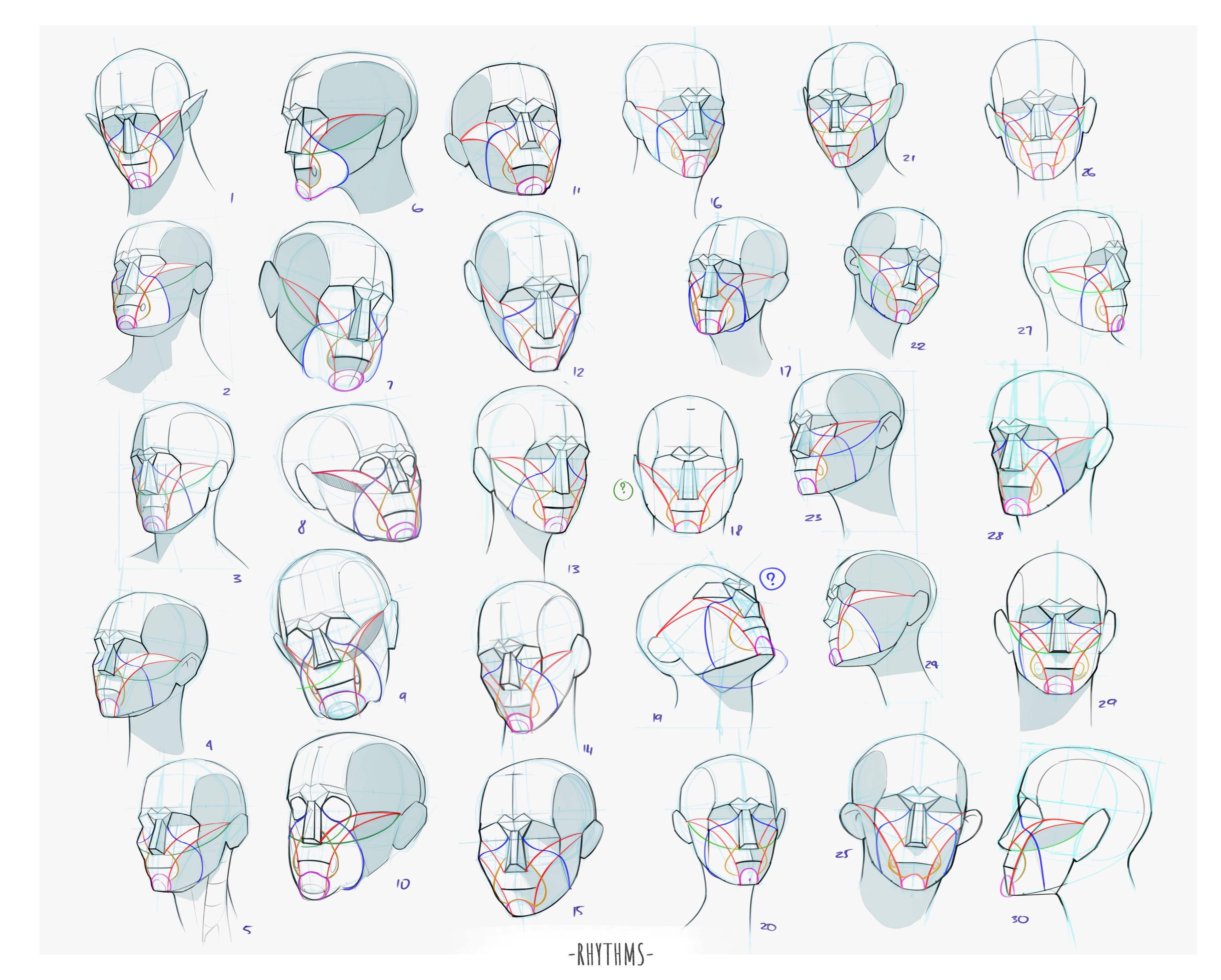
The next step was observing how different parts of the face connect to one another.
Facial features do not exist in isolation. The brow flows into the cheekbone, the shape of the nose affects the area around the mouth, and the jaw defines the character of the entire lower part of the face.
These relationships are especially important when it comes to likeness. It rarely depends on a single perfectly captured feature. More often, it comes from a system of relationships: distances, proportions, directions, and characteristic transitions between forms.
That is why a highly simplified portrait can sometimes remain recognizable, while a carefully rendered one does not.
The next step was observing how different parts of the face connect to one another.
Facial features do not exist in isolation. The brow flows into the cheekbone, the shape of the nose affects the area around the mouth, and the jaw defines the character of the entire lower part of the face.
These relationships are especially important when it comes to likeness. It rarely depends on a single perfectly captured feature. More often, it comes from a system of relationships: distances, proportions, directions, and characteristic transitions between forms.
That is why a highly simplified portrait can sometimes remain recognizable, while a carefully rendered one does not.
Variation Instead of a Formula
Variation Instead of a Formula
Variation Instead of a Formula
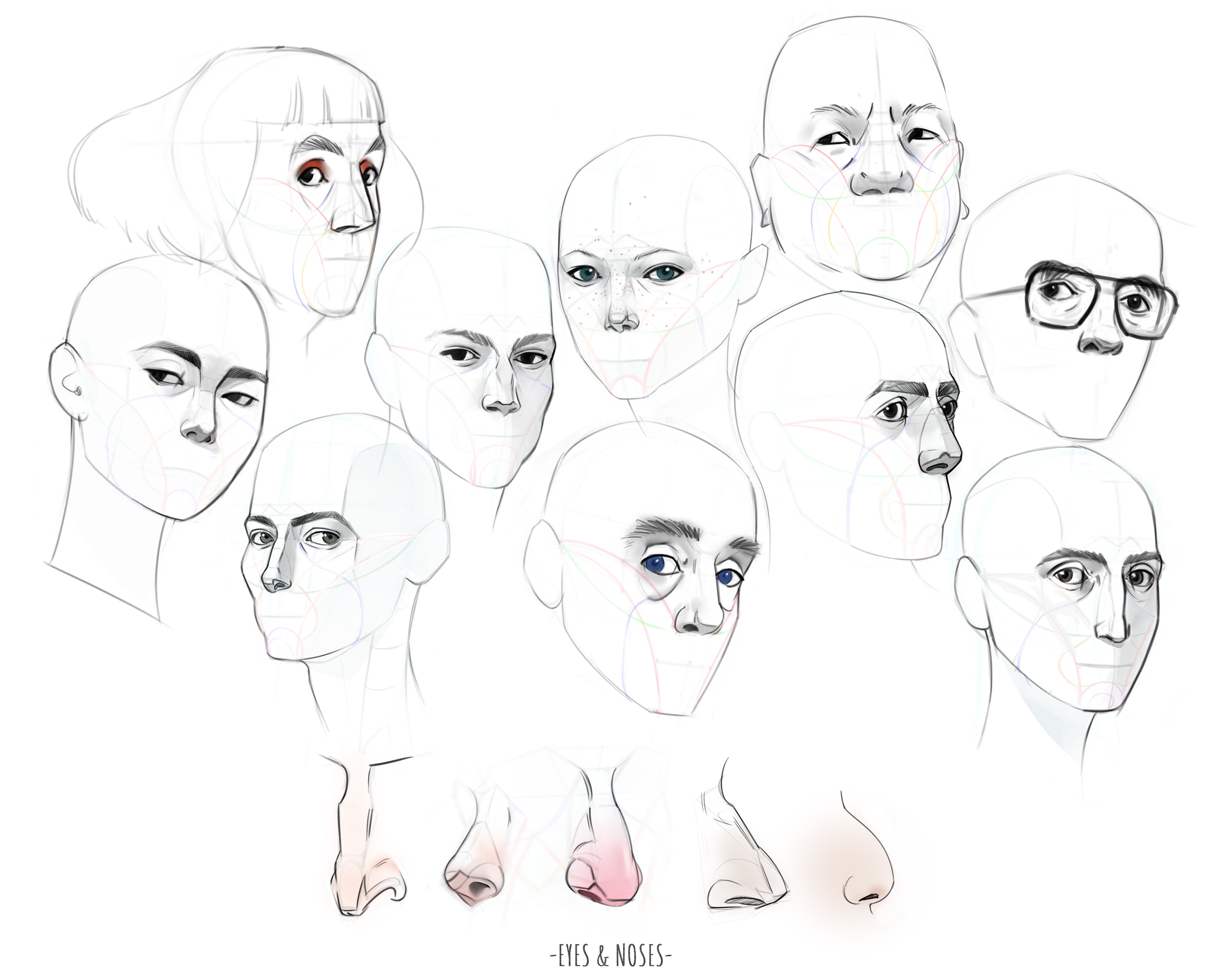
When you start studying eyes, noses, lips, and ears separately, the idea of a single “correct” universal form disappears pretty quickly. The more you observe, the more obvious the variety becomes.
For me, this became especially useful in stylization. Instead of inventing exaggeration from scratch, I could start from an existing characteristic and decide how far I wanted to push it. In that sense, stylization becomes not a replacement for observation, but a continuation of it.
When you start studying eyes, noses, lips, and ears separately, the idea of a single “correct” universal form disappears pretty quickly. The more you observe, the more obvious the variety becomes.
For me, this became especially useful in stylization. Instead of inventing exaggeration from scratch, I could start from an existing characteristic and decide how far I wanted to push it. In that sense, stylization becomes not a replacement for observation, but a continuation of it.

Hair as Part of the Silhouette
Hair as Part of the Silhouette
Hair as Part of the Silhouette
My attitude toward hair changed as well.
I used to see it mostly as a finishing layer. Later, I realized how directly it affects the silhouette of the head, rhythm, balance, and the overall character of the image.
So instead of focusing on individual strands, I started by looking for the larger masses, direction, and overall shape of the hairstyle. This made the process much simpler and the final result more cohesive.
My attitude toward hair changed as well.
I used to see it mostly as a finishing layer. Later, I realized how directly it affects the silhouette of the head, rhythm, balance, and the overall character of the image.
So instead of focusing on individual strands, I started by looking for the larger masses, direction, and overall shape of the hairstyle. This made the process much simpler and the final result more cohesive.

Light as a Test of Form
Light as a Test of Form
Light as a Test of Form
Working with value made it clear how closely construction and lighting are connected. Light does not simply create volume - it reveals whether that volume is actually built convincingly.
Once you stop thinking only in terms of “light” and “dark” and start thinking in terms of planes and changes in form, the portrait becomes much more logical. It also becomes obvious how strongly the character of an image depends on the lighting itself.
Working with value made it clear how closely construction and lighting are connected. Light does not simply create volume - it reveals whether that volume is actually built convincingly.
Once you stop thinking only in terms of “light” and “dark” and start thinking in terms of planes and changes in form, the portrait becomes much more logical. It also becomes obvious how strongly the character of an image depends on the lighting itself.

From Observation to Stylization
From Observation to Stylization
From Observation to Stylization
The most interesting part for me was simplification. Once the construction became clearer, I could start consciously removing information.
What is actually important?
Which forms can be removed?
What can be pushed further?
How much can the proportions change without losing the character?
This is where portrait practice began to overlap directly with character design. Stylization stopped being a question of “drawing less realistically.” Instead, it became a question of selection: what information to keep, what to remove, and what to emphasize.
The most interesting part for me was simplification. Once the construction became clearer, I could start consciously removing information.
What is actually important?
Which forms can be removed?
What can be pushed further?
How much can the proportions change without losing the character?
This is where portrait practice began to overlap directly with character design. Stylization stopped being a question of “drawing less realistically.” Instead, it became a question of selection: what information to keep, what to remove, and what to emphasize.

Color and Visual Language
Color and Visual Language
Color and Visual Language
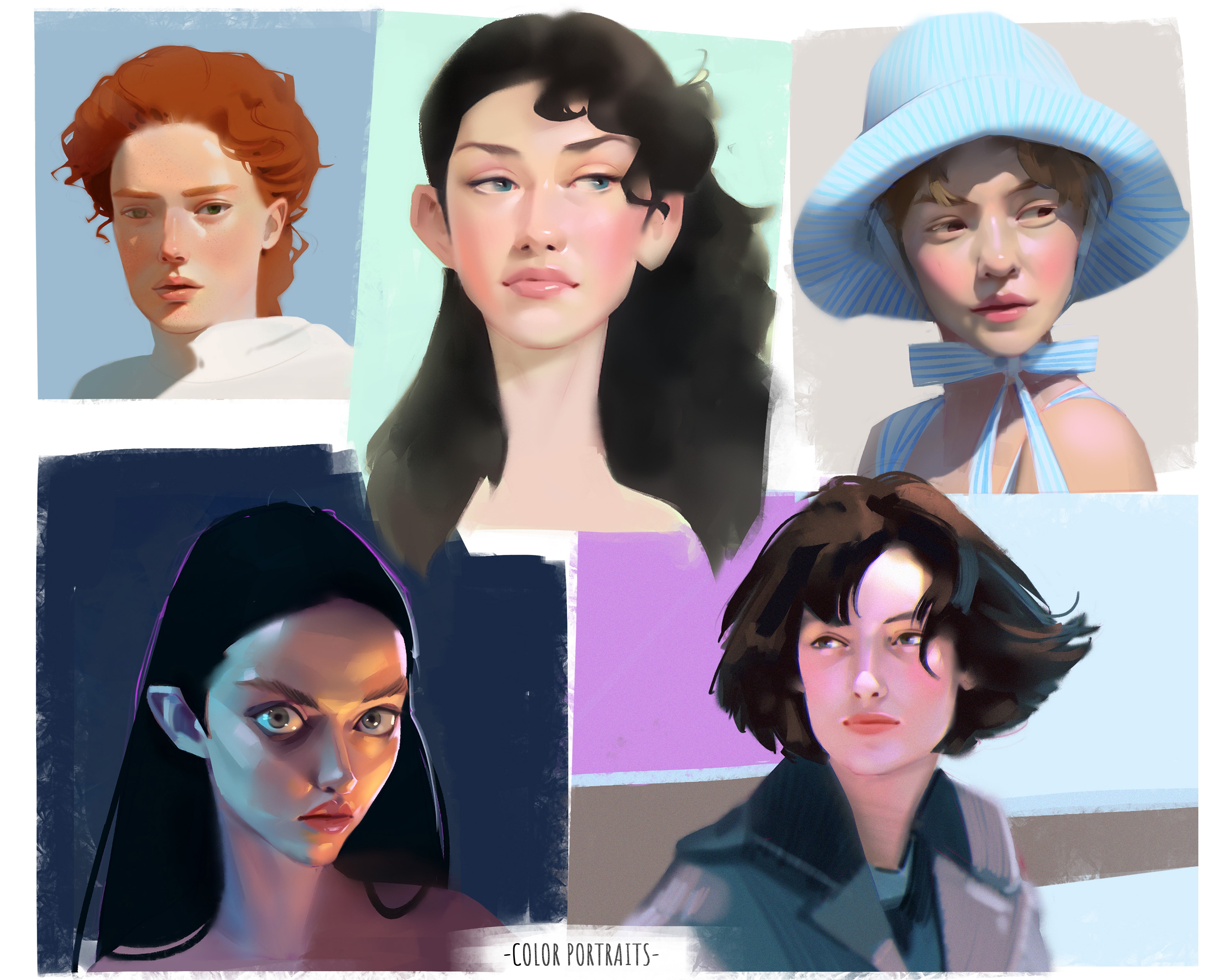
A similar shift happened with color.
It stopped being simply the final layer on top of the drawing and became another way to control the impression of the portrait. Temperature, saturation, contrast, edges, and lighting all affect not only the technique, but also the character of the image.
And gradually, it became clear that visual style is built from exactly these kinds of repeated decisions.
A similar shift happened with color.
It stopped being simply the final layer on top of the drawing and became another way to control the impression of the portrait. Temperature, saturation, contrast, edges, and lighting all affect not only the technique, but also the character of the image.
And gradually, it became clear that visual style is built from exactly these kinds of repeated decisions.
Style as a System of Decisions
Style as a System of Decisions
Style as a System of Decisions
I used to think that style was something you had to find.
Now I see it more as something that develops gradually, through habits of choice and countless hours of repetition and practice.
What you simplify.
What you emphasize.
Which shapes you prefer.
How you handle edges.
How far you move away from realism.
How you use light and color.
Once these decisions start repeating consciously, the work becomes more consistent and less dependent on chance.
I used to think that style was something you had to find.
Now I see it more as something that develops gradually, through habits of choice and countless hours of repetition and practice.
What you simplify.
What you emphasize.
Which shapes you prefer.
How you handle edges.
How far you move away from realism.
How you use light and color.
Once these decisions start repeating consciously, the work becomes more consistent and less dependent on chance.

What Changed
What Changed
What Changed
The biggest change happened not so much in the final result, but in the process itself. Now, when a portrait is not working, I can analyze the problem more specifically. Is the issue in the construction, proportions, rhythms, silhouette, lighting, or stylization?
Portraits are still a space for experimentation for me, but now I also see them as a useful laboratory for design, a place where observation, form, character, simplification, and style can all be explored at the same time.
The biggest change happened not so much in the final result, but in the process itself. Now, when a portrait is not working, I can analyze the problem more specifically. Is the issue in the construction, proportions, rhythms, silhouette, lighting, or stylization?
Portraits are still a space for experimentation for me, but now I also see them as a useful laboratory for design, a place where observation, form, character, simplification, and style can all be explored at the same time.